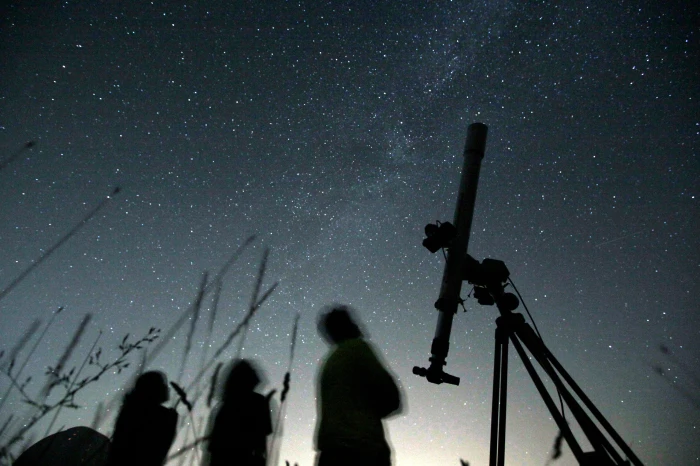



Skywatchers are preparing for a rare celestial display as six planets are set to align in the night sky at the end of February. This planetary parade, visible in many parts of the world, offers a striking reminder of the vast and dynamic architecture of our solar system.
The event will feature several bright planets appearing along the ecliptic—the path the Sun traces across the sky. While the planets are not physically close to one another in space, their alignment from Earth’s perspective creates the illusion of a coordinated procession.
“Planetary alignments reveal the elegance and precision of orbital mechanics.”
Astronomy Experts
Astronomers note that such alignments are not extremely rare, but seeing six planets visible at once without specialized equipment is less common. Depending on viewing conditions, some may be visible to the naked eye, while others require binoculars or small telescopes.
Clear skies and minimal light pollution will enhance the experience. Observers are encouraged to look shortly after sunset or before sunrise, when planetary brightness contrasts sharply with the darker sky.
Beyond its visual appeal, the event offers educational value. Planetary alignments provide an opportunity to explain orbital mechanics, gravitational forces, and the scale of interplanetary distances.
While no mystical meaning accompanies the parade, its beauty lies in the predictable precision of celestial motion. Each planet follows its own orbit, yet from Earth’s vantage point, they appear momentarily united in a shared display.
For amateur astronomers and casual stargazers alike, the February lineup promises a memorable glimpse into cosmic order and wonder.