


U.S. Supreme Court agrees to take up a major climate lawsuit brought by the city and county of Boulder, Colorado against fossil fuel producers, including ExxonMobil and Suncor Energy., The justices will decide whether such state-law climate damage claims belong in state court or must be heard in federal court — a question that could affect dozens of similar lawsuits nationwide. Legal and National Implications
The Colorado case alleges that oil companies knowingly contributed to greenhouse-gas emissions and misled the public about climate risks, leading to increased wildfires, heat and air pollution. The companies argue that climate policy is a federal issue, not a state one. A decision could determine whether municipalities can seek compensation from fossil fuel producers for climate-related harms or whether such claims are preempted by federal law. such as The U.S. Supreme Court has agreed to hear a bid by ExxonMobil (XOM.N), opens new tab and Suncor Energy (SU.TO), opens new tab to scuttle a lawsuit brought by officials in Boulder, Colorado that seeks to hold the oil companies liable for helping fuel climate change in a case that could affect dozens of similar lawsuits around the country. The justices on Monday took up an appeal by the companies of a lower court's ruling that let the litigation move forward. The suit alleging state law violations by the companies seeks unspecified monetary damages for costs incurred by Boulder associated with mitigating the impact of climate change.
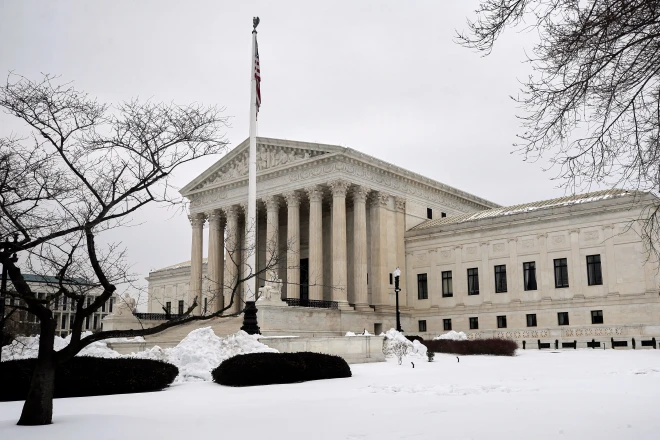
“The U.S. Supreme Court agreed on Monday to hear a bid by Exxon Mobil and Suncor Energy to block a climate change lawsuit brought by the city and county of Boulder, Colorado.”
John Kruzel
The dynamic is a reflection of a larger conflict inside the GOP: governors frequently deal with distinct political realities at home, while Trump continues to have considerable influence over the party's course. Many are in charge of purple or contested states, where winning reelection and passing legislation depend on bipartisan cooperation and practical government.
The U.S. Supreme Court has agreed to hear a bid by ExxonMobil (XOM.N) and Suncor Energy (SU.TO) to scuttle a lawsuit brought by officials in Boulder, Colorado, seeking to hold the oil companies liable for allegedly helping fuel climate change in a case that could affect dozens of similar lawsuits nationwide.
The justices on Monday took up an appeal by the companies challenging a lower court ruling that allowed the litigation to move forward. The suit, alleging violations of state law, seeks unspecified monetary damages for costs incurred by Boulder in mitigating the impacts of climate change.
The U.S. Supreme Court agreed to take up the oil climate appeal in the case brought by the city and county of Boulder, Colorado, challenging ExxonMobil and Suncor Energy’s attempt to dismiss the lawsuit. The question before the justices is whether such state-law climate-damage claims are preempted by federal law or belong in federal court — a decision that could shape how dozens of similar suits are litigated nationwide. :contentReference[oaicite:0]{index=0}
Oil companies argue federal preemption: ExxonMobil and Suncor Energy contend that federal environmental statutes and national energy policy should override state tort claims, and that global greenhouse-gas emissions can’t be regulated through a patchwork of state court actions. :contentReference
The Colorado Supreme Court previously ruled that Boulder’s claims were not preempted and could proceed under state law, keeping the lawsuit alive before it was appealed to the nation’s highest court. :contentReference
Climate litigation trends continue: legal scholars note a growing number of climate suits brought by cities and states alleging that fossil fuel producers misled the public about the harms of greenhouse gas emissions, while the Supreme Court’s decision to hear the Boulder case could signal how far such litigation can go. :contentReference
Broader legal fight over climate accountability: though separate, related litigation — such as suits over pollution enforcement and environmental regulation — continues to unfold across U.S. courts, highlighting the contentious role of federal versus state authority in environmental law. :contentReference